10-Rep Learning ~ Teague's Tech Treks

Learning Technology & Tech Observations by Dr. Helen Teague

By

Computational Thinking Activity Examples in STEAM

Computational Thinking Activity Examples in STEAM

Art and Computational Thinking rendered by Loveart

Artistic Image Rendered by Loveart


Computational Thinking…at the ECE and Primary Grade Level, the key is Teacher Modeling! Also, keeping the computational tools simple enough that younger Students can focus on creative expression while experiencing how technology expands their artistic possibilities. Each example maintains age-appropriate complexity while introducing Students how computational processes can enhance and transform their creative work!

Examples: Drawing and Models
Kinesthetic Materials such as Flannel cut-outs, popsicle sticks, clay, PlayDoh, can be used to create models, dioramas, and settings from their drawing blueprints.

Tools Programs like Scratch Jr., Geogebra, Tynker, or even simple drawing apps let students create digital art and animations. They can make characters move, change colors, or respond to clicks—combining their drawings with basic coding concepts.

Physical Computing Projects Students can use tools like Makey Makey to turn their drawings or sculptures into interactive pieces. For example, they might paint with conductive paint and create circuits that light up or make sounds when touched. This connects traditional art making with simple electronics.

Digital Collage and Photo Editing Even basic photo editing tools or collage apps let students manipulate images in ways that would be impossible with scissors and glue—changing colors, duplicating elements, adding filters, or layering images.

Music and Sound Creation Apps like GarageBand or Chrome Music Lab allow students to compose music computationally, experimenting with loops, beats, and digital instruments. They can create soundscapes to accompany visual art or storytelling.

Pixel Art and Grid-Based Design Pixel art naturally introduces concepts like patterns, symmetry, and coordinates. Students can create designs on graph paper and then translate them into digital formats, or use apps specifically designed for pixel art.

Stop-Motion Animation Using tablets or computers with simple stop-motion apps, students can animate their clay sculptures, drawings, or found objects—learning about sequencing and how many small changes create movement.

Pattern Generation and Tessellations Students can use simple coding blocks or pattern-making apps to create repeating designs and Tessellations. They might program shapes to rotate, flip, or change colors in systematic ways, exploring mathematical concepts like symmetry and repetition while creating visually striking artwork. Tools like Scratch or even Google Sheets can be used to generate complex patterns from simple rules.

Digital Storytelling with Branching Narratives Students can create interactive stories where readers make choices that affect the outcome. Using platforms like Scratch, Twine, or Book Creator, they combine their writing, illustrations, and basic programming to create “choose your own adventure” style narratives. The computational element is in designing the story’s logic and multiple pathways.

Light Painting and Long-Exposure Photography Students can use tablets or cameras with long-exposure settings to “paint” with light sources in dark spaces. They can plan their designs, experiment with different movements, and see how the camera’s computational processing captures their motion over time in ways the human eye cannot—blending performance art with digital photography.

Computational Poetry and Text Manipulation Students can use simple code or apps to manipulate text in creative ways—generating poems from word lists, creating acrostics automatically, rearranging words based on rules they design, or even making “word clouds” that visualize the frequency of words in their writing. This combines language arts with algorithmic thinking to create visual-textual art.


Computational Thinking…at the Secondary Grade Level, Students can also engage more deeply with the conceptual aspects of computational art: exploring questions about authorship, the relationship between artist and algorithm, digital culture, and how computation changes artistic practice itself. Secondary students can engage with more sophisticated computationally enhanced art practices.


Examples: Coding-Based Visual Art Students can use Processing, p5.js, or similar creative coding platforms to generate visual art through code. They might create generative art that produces unique patterns, interactive animations, or data visualizations that transform information into aesthetic expressions.

3D Modeling and Digital Sculpture Tools like Blender, Tinkercad, or SketchUp allow students to create three-dimensional digital sculptures and environments. These can be rendered as images, animated, or even prepared for 3D printing to bridge digital and physical art forms.

Game Design as Artistic Expression Using Unity, Unreal Engine, or more accessible platforms like Construct or GameMaker, students can create narrative-driven or experimental games that explore themes, emotions, and ideas—treating the game itself as an art object rather than just entertainment.

AI-Assisted Art Creation Students can experiment with AI image generators, style transfer algorithms, or machine learning tools to create hybrid works. They might train models on their own artwork, explore ethical questions about AI authorship, or use AI as a collaborative partner in the creative process.

Interactive Installations and Physical Computing Arduino or Raspberry Pi projects let students create installations that respond to viewers through sensors, motors, lights, and sound. For example, an artwork that changes based on proximity, environmental data, or audience interaction.

Digital Photography and Computational Imaging Beyond basic editing, students can explore HDR imaging, photogrammetry (creating 3D models from photographs), glitch art, or algorithmic manipulation of images to create surreal or abstract compositions.

Web-Based and Net Art Students can create interactive websites as art pieces using HTML, CSS, and JavaScript—exploring how browsers, hyperlinks, and digital navigation can become artistic mediums.

Music Production and Sound Design Digital audio workstations (DAWs) like Ableton, FL Studio, or free options like Audacity enable students to compose, manipulate, and layer sounds. They might create electronic music, soundscapes, or experimental audio art.

Motion Graphics and Video Art Tools like After Effects, Premiere Pro, or open-source alternatives allow students to create animated typography, video collages, or time-based digital art that combines moving images with computational effects.

Data Art and Visualization Students can transform datasets—whether personal, social, or environmental—into visual or interactive artworks that communicate information aesthetically, using tools like Tableau, D3.js, or custom code.


By

Weekend Ed. Quote ~ July 25

“Somewhere along the line, as we grow up, we get so used to doing things a certain way that we lose touch with that creative side of the brain. As kids, we tried all sorts of things and never stuck to a certain methodology or structure, but I think facilitation brings out that childlike curiosity, which makes the whole thing very special. And I think that’s what’s kept me going.” ~Varsha Prasad, Facilitation Lab Podcast, Episode. 164


FacilitationTeague

Image rendered by DeepAi


More Weekend Ed. Quotes

#GCUTEC544 #GCUTEC595 #GCUTEC516 #GCUTEC521
#CUNE604, #CUNE605

By

Weekend Ed. Quotes ~ April 25

This week’s Ed Quote features STEAM connections spanning two centuries and features a quote from Dublin-born Edmund Burke. 

“Liberty does not exist in the absence of morality.” ~ Edmund Burke


Image Caption: Burke’s quote rendered as an vintage Meme generated by
ImgFlip AI https://imgflip.com/ 

This AI image features app smashing. AppSmashing involves combining content created in various different apps and “smashing” them together into one finished product. The AppSmashing for this quote included initial source post on X mobile, quote verification with Goodreads app, AI design with ImgFlip, and post through Edublogs mobile app. AppSmashing was first originated in 2013 by Greg Kulowiec from EdTechTeacher.

Edmund Burke was a Dublin-born, Anglo-Irish statesman, journalist, philosopher, and social theorist


More Weekend Ed. Quotes

#GCUTEC544 #GCUTEC595 #GCUTEC516 #GCUTEC521
#CUNE604, #CUNE605

By

Weekend Ed. Quote ~ April 18

“Easter spells out beauty, the rare beauty of new life.” ~S.D. Gordon

Easter Bunny AI Generated
Easter Bunny AI Generated by Deepai using Fantasy Character Generator

S.D. Gordon (1859 – 1936) was a prolific writer, speaker, and minister.

Linked on X- https://x.com/TweetTeague/status/1913099845335687254


More Weekend Ed. Quotes

#GCUTEC544 #GCUTEC595 #GCUTEC516 #GCUTEC521
#CUNE604, #CUNE605

By

Weekend Ed. Quote ~ January 6

“The truly creative mind in any field is no more than this: A human creature born abnormally, inhumanly sensitive. To him… a touch is a blow, a sound is a noise, a misfortune is a tragedy, a joy is an ecstasy, a friend is a lover, a lover is a god, and failure is death. Add to this cruelly delicate organism the overpowering necessity to create, create, create — so that without the creating of music or poetry or books or buildings or something of meaning, his very breath is cut off from him. He must create, must pour out creation. By some strange, unknown, inward urgency he is not really alive unless he is creating.” ~Pearl S. Buck, (1892 – 1973)

PencilAndTools


#PBSReaders4Life

#GCUTEC544 #GCUTEC595 #GCUTEC516 #GCUTEC521
#CUNE607 #CUNE604, #CUNE605

More Weekend Ed. Quotes

By

Weekend Ed Quote ~ October 21

“Our goal is to build an amiable school, where children, teachers and families feel at home. Such a school requires careful thinking and planning concerning procedures, motivations and interests. It must embody ways of getting along together, of intensifying relationships.”
~Loris Malaguzzi, The Hundred Languages of Children


                                     References

Edwards, C., Gandini, L. & Forman, G. (1993). The hundred languages of children.  Ablex.
Also available through Google Books 


#PBSReaders4Life

#GCUTEC544 #GCUTEC595 #GCUTEC516 #GCUTEC521
#CUNE607 #CUNE604, #CUNE605


More Weekend Ed. Quotes

By

Weekend Ed. Quote ~ April 22

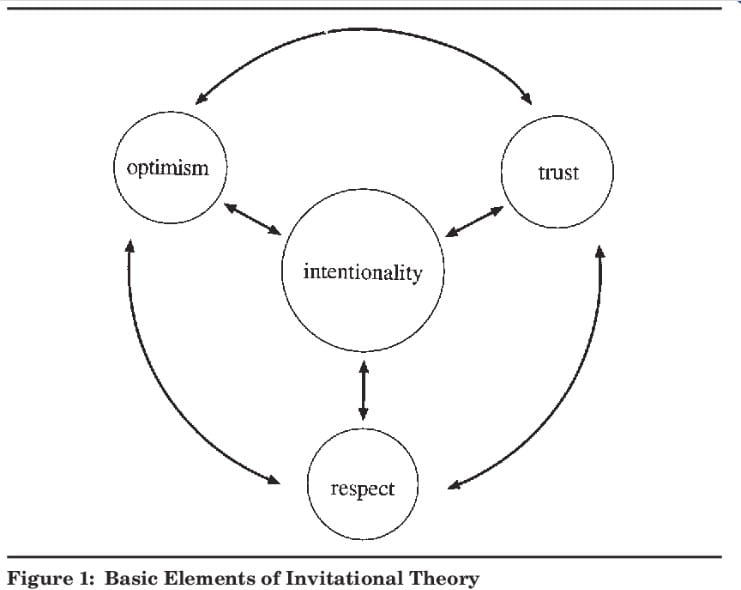
“Invitational education is a theory of practice to create a total school environment that intentionally summons people in schools to realize their relatively boundless potential.” ~Purkey. 1991, p. 2.

Basic Elements of Invitational Theory


                                                                              References

Setti-Parnes, M. (2021). Implementing invitational education theory to address the unique needs of children from military families. Journal of
Invitational Theory and Practice
27, 24-35. p. 2. https://files.eric.ed.gov/fulltext/EJ1325458.pdf


#PBSReaders4Life

#GCUTEC544 #GCUTEC595 #GCUTEC516 #GCUTEC521
#CUNE604 #CUNE605


More Weekend Ed. Quotes

By

Tolkien Reading Day, Friday March 25 – Activities and Scavenger Hunt

Tolkien Reading Day Art and Math Integration Icebreakers/Early Finishers Activity/ Extra Credit Scavenger Hunt

Personalized, shortened link to this post: https://tinyurl.com/HobbitTeague


Tomorrow, March 25 is Tolkien Reading Day, sponsored by The Tolkien Society. Tolkien Reading Day has been organized by the Tolkien Society since 2003 to encourage fans of all ages “to celebrate and promote the life and works of J.R.R. Tolkien by reading favorite passages.”


Icebreaker How-To’s: 

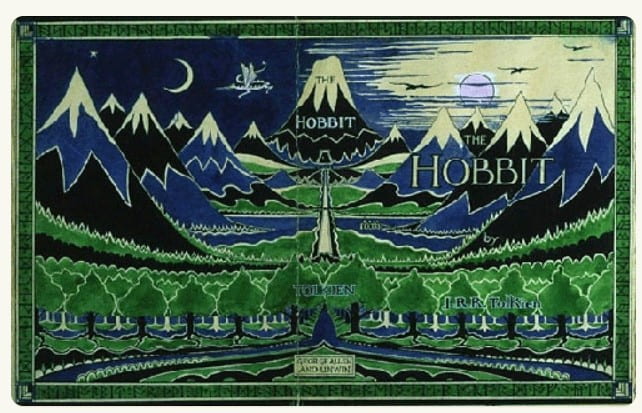
Project this book cover and, as students walk on (or after the bell, whatever is your instructional practice), ask students to go on a mini-middle Earth scavenger hunt.

Hobbit Book Cover

Image Source: https://www.dustjackets.com/pages/books/49742/j-r-r-tolkien/hobbit-the


Students find the following: 

  • All the triangles in the book cover (by number or diagram)
  • All of the circles in the book cover  (by number or diagram)
  • One other geometric shape (give the shape and the number)
  • An item represented 13 times
  • In what year was The Hobbit first published? 
  • Using our current year, how many years ago was The Hobbit first published? 
  • How old was J.R.R. Tolkien when The Hobbit was first published? 
  • Your Choice (consider sharing as a Reply to this post)
  • Your Choice (consider sharing as a Reply to this post)
  • Students write their own question and provides the answer


*****Be sure to honor the purpose of the day and read your favorite section of The Hobbit! Click here to go to the Library of Congress to see an excerpt of The Hobbit: http://catdir.loc.gov/catdir/samples/hm051/98102207.html


Happy Tolkien Reading Day!!

via GIPHY


For More Information

Education World Hobbit Scavenger Hunt – https://www.educationworld.com/a_lesson/internet-scavenger-hunt/the-hobbit.shtml
PDF file of the Scavenger Hunt: https://www.educationworld.com/sites/default/files/Internet-Scavenger-Hunt-Hobbit.pdf 

The Tolkien Society ~~ https://www.tolkiensociety.org/

gif via GIPHY

By

CT Presentation ~Dr. Nettrice Gaskins

https://www.flipsnack.com/7DC995DD75E/ct-preso-dr-nettrice-gaskins-progressivist.html

By

Weekend Ed. Quotes ~ September 24, 2021

On the importance of connecting innovation with creativity…

The Arts 2

“All innovation begins with creative ideas. Successful implementation of new programs, new product introductions, or new services depends on a person or a team having a good idea-and developing that idea beyond its initial state.”
~Amabile, Conti, Coon, Lazenby, & Herron, 1996, p. 1154.

In 1999, researchers Sternberg and O’Hara provided the pioneering framework of five possible relationships between creativity and intelligence:

  1. Creativity is a type of intelligence

  2. Intelligence is a type of creativity

  3. Creativity and intelligence are overlapping constructs (they have some traits in common)

  4. Creativity and intelligence are part of the same construct (they’re basically the same thing)

  5. Creativity and intelligence are distinct constructs (there is no relationship between them)


Here is a blog post (non-peer-reviewed) on creativity with some engaging design features and easy readability: What is creativity? The ultimate guide to understanding today’s most important ability by Kelly Morr at this link: https://99designs.com/blog/creative-thinking/what-is-creativity/ 


References

Amabile, T. M., Conti, R., Coon, H., Lazenby, J., & Herron, M. (1996). Assessing the work environment for creativity. Academy of
management journal, 39(5),
p. 1154-1184. http://people.wku.edu/richard.miller/amabile.pdf 

Morr, K. (2018). What is creativity? The ultimate guide to understanding today’s most important ability. 99 Designs.  https://99designs.com/blog/creative-thinking/what-is-creativity/

Sternberg, R. J., & O’Hara, L. A. (1999). Creativity and intelligence.


More Weekend Ed. Quotes

Skip to toolbar