We celebrate the successful splash down of the Artemis II Orion capsule Friday night!
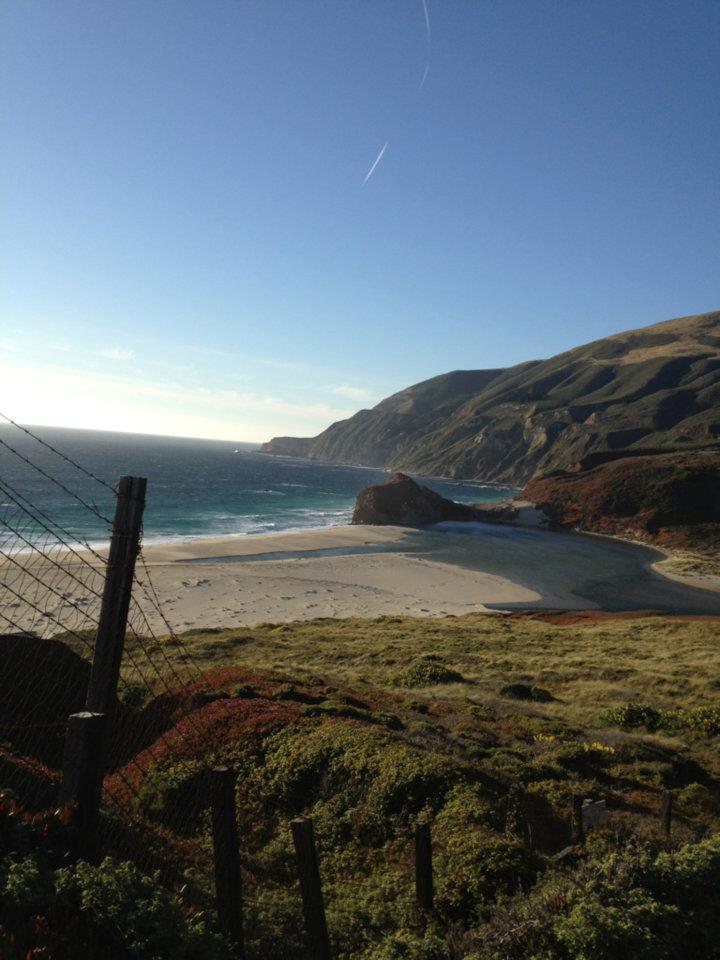
Photo shared by Beth ODell
“Today belongs to the engineers and technicians who touched this machine, and it does, and their work was good.” ~Amit Kshatriya, NASA Associate Administrator, April 10, 2026
Context of the Quote:
Mission: Artemis II, which concluded with a splashdown of the Orion capsule in the Pacific Ocean at 5:07pm, Pacific Time.
Significance: Acting NASA administrator Sean Duffy announced the selection of Kshatriya as associate administrator in a statement on September 3, 2025. Kshatriya’s quote was meant to honor the welders at Michoud, technicians at Kennedy Space Center, and Engineers who built and prepared the Orion spacecraft and SLS rocket.
Supporting Quote: “The path to the lunar surface is open, but the work ahead is greater than the work behind us,” Kshatriya added, looking forward to the future Artemis III mission.
In Your Classroom: Consider presenting and discussing this quote with your students.
Edwards, B. (2026, April 10). Artemis II astronauts splash down after NASA moon flyby. Florida Today. https://www.floridatoday.com/story/tech/science/space/2026/04/10/artemis-ii-astronauts-splash-down-after-nasas-mission-around-the-moon/89524026007/
Connecting Concepts of American Educational Philosophies: Perennialism
Our course addresses the American Educational Philosophies. Connections to Primary Sources and an American historical continuum adds an extra layer of contextual understanding for American educational philosophies.
Primary Sources – 1st Textbook Printed in America – The New England Primer The New England Primer was published and used in American schools from 1690-1930. Prior to the New England Primer, in the 17th century, the schoolbooks in use had been Bibles brought over from England. The New England Primer was the 1st textbook printed in America The New England Primer was first published between 1687 and 1690 by printer Benjamin Harris (Library of Congress, 2025).
Note: Teague photo: The New England Primer, Library of Congress Reading Room
Additional Foundational Primary Sources – George Washington’s Farewell Address (1796) and the Northwest Ordinance (1787/1789).
George Washington’s Farewell Address (1796), 230 years ago emphasized the importance of education, specifically in the context of fostering a virtuous, informed citizenry and promoting institutions for knowledge. President Washington viewed widespread education and public enlightenment as essential supports for the stability of a republic
The passage of the Northwest Ordinance of 1787 (reapproved in 1789 after the adoption of the U.S. Constitution) communicated the Founder’s vision for establishing American public education for all young people. The Northwest Ordinance mandated that, because “”Religion, morality, and knowledge, being necessary to good government and the happiness of mankind, schools and the means of education shall forever be encouraged” “religion, morality, and knowledge” were necessary for good government, “schools and the means of education shall forever be encouraged,” (Article 3) and set aside land for schools in new territories
American Educational Perennialism
American Educational Perennialism is a teacher-centered, conservative philosophy focusing on teaching enduring, universal truths and principles that have lasted for centuries. (Please note that as a Proper Noun, the words American Educational Perennialism are capitalized.) It emphasizes a liberal arts curriculum based on “Great Books,” developing rational thought and critical thinking over vocational training, with teachers acting as authoritative guides in structured classrooms. Although some reading materials (and AI) indicate the 1930’s as the time frame for American educational Perennialism, please observe a caution not to silo each theory during each week. Critical Thinkers for American educational Perennialism, Robert Hutchins, Mortimer Adler, and William Bennett wrote and published through the 1980’s. There continues to be interest in American Educational Perennialism as a main catalyst for teaching and learning.
The current voyage of Artemis II to the dark side of the moon happily coincides with our accelerated course timeline and the enduring value characteristic of American Educational Perennialism. An example of Perennialism’s emphasis on enduring, universal truths and principles can be heard in the 1962 speech by President John F. Kennedy which set the foundation starting point for Moon exploration.
Here is the famous clip from President Kennedy’s 1962 speech (John F. Kennedy Library Foundation, 2020).
A link to the full speech (Rice University, 2019) is included in the References list.
Here is the Transcript link for President Kennedy’s full speech: https://www.rev.com/transcripts/john-f-kennedy-jfk-moon-speech-transcript-we-choose-to-go-to-the-moon.
Looking forward to this continued learning in this historic time! ~Dr. Teague
References
Black, D.W. (2021). The American right to education: The Northwest Ordinance, Reconstruction, and the current challenge. Poverty and Race Research Action Council. https://www.prrac.org/the-american-right-to-education-the-northwest-ordinance-reconstruction-and-the-current-challenge/
John F. Kennedy Library Foundation (2020). Archive Clip: JFK at Rice University, Sept. 12, 1962 – “We choose to go to the Moon.” [Video.] YouTube. https://www.youtube.com/watch?v=iQV9CAJWlVY
Library of Congress (2021). George Washington’s Farewell Address: Primary documents in American History research guide. https://guides.loc.gov/washington-farewell-address
Library of Congress (2025). American History: “The New England Primer.” [Video.]. Loc.gov. https://www.loc.gov/item/video-11166/
NASA (2026, April 6). NASA’s Artemis II Crew Flies Around the Moon (Official Broadcast). [Video.] YouTube. https://www.youtube.com/watch?v=z-j1uxBmis0
Rev.com (2025). John F. Kennedy (JFK) Moon Speech Transcript: “We Choose to Go to the Moon.” https://www.rev.com/transcripts/john-f-kennedy-jfk-moon-speech-transcript-we-choose-to-go-to-the-moon
Rice University (2019). “Why go to the moon?” – John F. Kennedy at Rice University. [Video.] YouTube. https://www.youtube.com/watch?v=QXqlziZV63k
(citation for this post): Teague, H. (2026). Connecting Concepts of American Educational Philosophies: Perennalism. [Blog post.]. Edublogs. https://4oops.edublogs.org/2026/04/06/connecting-concepts-of-american-educational-philosophies-perennialism/
Christina Koch was a firefighter at the South Pole at -111°F before she ever applied to be an astronaut.
That was maybe the fourth most interesting line on her resume. Christina Koch grew up in North Carolina, earned three degrees from NC State, and her first real job was building deep-space instruments at NASA.
Then she left for Antarctica and spent three and a half years bouncing between the Arctic and Antarctic as a research scientist, including a full winter at the South Pole base. Winter at the South Pole means going months without sunlight or fresh food, with a crew of about 50 people and no way out until flights resume. While she was at the South Pole, she also joined the glacier search-and-rescue team.
After returning from the South Pole, she went to Johns Hopkins and built instruments for two NASA missions (one of them is still orbiting Jupiter right now). Christina Koch figured out how to start a tiny vacuum pump that NASA designed for a future Mars rover. Johns Hopkins nominated it for their Invention of the Year in 2009. Then she went back to the field. More time in Antarctica and a stretch up in Greenland. A government research station in northern Alaska, near the top of the world. Then she ran another one in American Samoa, near the equator. In 2013, NASA selected her from 6,300 applicants. Eight people got in. Her first space mission was supposed to be a normal rotation on the International Space Station, but NASA extended it. She ended up staying 328 straight days and orbiting Earth 5,248 times, covering about 139 million miles (roughly 291 round trips to the Moon). Up there, she ran over 210 experiments, including tests of cancer drugs in zero gravity and 3D printers that can build structures close to human tissue. Six spacewalks, 42 hours floating outside the station. She learned Russian for the training. She flies supersonic jets. Right now, Koch is on Artemis II, heading for a flyby behind the far side of the Moon. The crew launched on April 1 and is on track to travel about 252,000 miles from Earth, which would break the all-time human distance record of 248,655 miles set by Apollo 13 in 1970. That record has stood for 56 years, and it was set during a disaster that nearly killed the crew. Fred Haise, one of the Apollo 13 astronauts, is 92 now. He told Koch: “I heard you’re going to break our record.” Nobody had left Earth’s neighborhood since December 1972. Koch and her three crewmates are the first in 53 years, and they are coming home at about 25,000 mph. That is faster than any crewed spacecraft has ever come back through the atmosphere.
Our Weekend Ed. Quote features a timeline of 200 years with a quote from the 1800’s and an image generated by DeepAI ~ yesterday.
“Young people must break machines to learn how to use them; get another made!” ~ English scientist Henry Cavendish (1731–1810), as quoted in Biographical Memoir of Henry Cavendish by the French naturalist and zoologist Georges Cuvier.
Photo generated by DeepAI, Deepai.org
Henry Cavendish is the scientist who is 1798 effectively “weighed” the Earth — without leaving his laboratory.Cavendish reportedly made this remark when he was informed that a young man had broken one of his expensive and valuable scientific instruments. Despite being famously shy and reclusive, this quote reflects a surprisingly pragmatic view of scientific education—that the cost of broken equipment was a necessary investment in the learning process of the next generation. Breaking, making, and tinkering would continue to influence Learning through the theoretical endeavors of Seymour Papert, Kolb, and Seimens.
References
Cuvier, G. (1828). Biographical memoir of Henry Cavendish. The Edinburgh New Philosophical Journal. p.222.
Over the years, The Weekend Ed. Quote has featured insight quotes from many educational theorists, practitioners, and researchers. Among these talented scholars are Lev Vygotsky, Seymour Papert, Jean Piaget, Thomas Sowell, George Seimens, Macolm Knowles, Dr. Linda Polin, Dr. Carol Ann Tomlinson, Mary McLoad Bethune, Audrey Waters, Mark Chen, Sherry Turkle, William J. Teague, Maria Montessori, John Taylor Gatto… and more!
Today, the Weekend Ed. Quote is from AI, specifically Google Gemini! This is a first for this blog! After a conversation on assessment and mentoring, Google Gemini provided this quotable gem:
“True mentorship isn’t about providing every answer; it’s about asking the one question that turns a student’s gaze away from the rubric and toward their own potential as a practitioner.” ~ Google Gemini AI (2026)
Thank you, Google Gemini, for your contribution to the Weekend Ed. Quote! #FirstAI_EdQuote
References
Google. (2026). Gemini (March 2026 version) [Large language model]. gemini.google.com
“The quote and specific pedagogical questions in this piece were developed in collaboration with Google Gemini (2026). All AI-generated suggestions were reviewed, refined, and verified by the author for professional accuracy.”
As of early 2026, the AI landscape is dominated by a rapidly shifting frontier of multimodal, high-reasoning models from key industry leaders. The market is defined by “The Big 3” (OpenAI, Google, Anthropic) alongside strong competitors like Meta, xAI, Grok, and Mistral.
Top Current Multimodal AI Models (2026) This chart compilation of information by Ethan Mollick (2025) and four AI models (Arena Intelligence AI (2026); Google Gemini (2026); LiveBench (2026); and VellumAI (2026) represents the leading frontier AI models based on recent benchmarks and releases.
Figure 1: Top Current AI Models (2026)
Top Current AI Models. Note. Image generated using the prompt “[Please render a Chart of current AI models]” by Google Gemini, 2026, https://gemini.google.com
Figure 1 Top Current AI Models. Note. Image generated using the prompt “[Please render a Chart of current AI models]” by Google Gemini, 2026, https://gemini.google.com
Here is a wordless, Loom video scroll of the full comparison webpage by VellumAI (2026). According to VellumAI, this data will refresh every six months so you may want to return to the link in the late summer. Please pause the video as needed and consider full-screen for best viewing.
LLM Leaderboard Vellum AI, Mollick and more: Wordless video,Teague, 2026.
Google. (2026). Gemini (Feb 25 version) [Large language model]. https://gemini.google.com/
LiveBench (2026, January 8). Leaderboard. https://livebench.ai/#:~:text=Table_content:%20header:%20%7C%20Model%20%7C%20Organization%20%7C,Organization:%20Google%20%7C%20Coding%20Average:%2067.50%20%7C
Mollick, E. (2025, January 26 ). Which AI to use now: An updated opinionated guide (Updated Again 2/15). One Useful Thing. [Blog Post.] https://www.oneusefulthing.org/p/which-ai-to-use-now-an-updated-opinionated
Teague, H. (2026). LLM Leaderboard Vellum AI, Mollick and more: Wordless video February 2026. [Video.] Loom. https://www.loom.com/share/f052a43ec8ba49da8dc978b100bae3b2
One of the predicted downfalls of digital media was that the original pioneering spirit of creativity and sharing would succomb to monetization. After the original hosting service discontinued my videos on its library, I was frantic to recover what the company who hosted my paid subscription did not value and deleted (along with a small, but vital video catalog. I was beyond relieved to find that Edublogs retained the original video. This is the backup of the original video posted on March 6, 2020.
I am so grateful to Edublogs for maintaining the special creative relationship with its bloggers.
Digital paranoia has caused me to re-record, save, and re-upload the original mp4 file. Here is the re-recorded, re-save, and reposted file.