10-Rep Learning ~ Teague's Tech Treks

Learning Technology & Tech Observations by Dr. Helen Teague

By

An Example of Participatory Leadership and Collaborative Project Management

By

Designing Visual Charts and Graphs with Claude AI

https://claude.ai https://claude.ai/public/artifacts/9baf8234-1b3a-42ac-ae11-129141cb39e3


DRAFT Version😊https://claude.ai/public/artifacts/5c273c64-ef41-4118-9528-4b1f07e3281bFull Serve Gas Stations in the US

By

Weekend Ed. Quote ~ March 13

Our Weekend Ed. Quote features a timeline of 200 years with a quote from the 1800’s and an image generated by DeepAI ~ yesterday. 

“Young people must break machines to learn how to use them; get another made!” ~ English scientist Henry Cavendish (1731–1810), as quoted in Biographical Memoir of Henry Cavendish by the French naturalist and zoologist Georges Cuvier.

Image of Cavendish Quote by DeepAI

Photo generated by DeepAI, Deepai.org


Henry Cavendish is the scientist who is 1798 effectively “weighed” the Earth — without leaving his laboratory. Cavendish reportedly made this remark when he was informed that a young man had broken one of his expensive and valuable scientific instruments. Despite being famously shy and reclusive, this quote reflects a surprisingly pragmatic view of scientific education—that the cost of broken equipment was a necessary investment in the learning process of the next generation. Breaking, making, and tinkering would continue to influence Learning through the theoretical endeavors of Seymour Papert, Kolb, and Seimens. 


                                      References

Cuvier, G. (1828). Biographical memoir of Henry Cavendish. The Edinburgh New Philosophical Journal. p.222.

and https://en.wikiquote.org/wiki/Henry_Cavendish


More Weekend Ed. Quotes

#GCUTEC544 #GCUTEC595 #GCUTEC516
#CUNE604, #CUNE605 #CUNE603

By

Using How-focused Examples from Science to Support Students and Teachers ~Henry Cavendish

Using How-focused Examples from Science to Support Students and Teachers ~ Henry Cavendish Measures the Strength of Gravity

     In 1798, a scientist effectively “weighed” the Earth — without leaving his laboratory. The English scientist Henry Cavendish designed an incredibly sensitive experiment. Inside a quiet wooden shed, he hung a horizontal rod from a very thin wire. Two small lead spheres were attached to the ends of the rod. Nearby, he placed two much larger lead balls. Because of gravity, the large spheres slightly pulled the smaller ones. The force was extremely tiny — so small that the rod twisted by only a minute fraction of a degree. Yet that tiny twist held a big secret. By carefully measuring this small movement, Cavendish determined the strength of the gravitational attraction between objects. From this, scientists could calculate the mass of the entire Earth. His estimate was remarkably close. Cavendish calculated Earth’s mass to be about 6 × 10²⁴ kilograms, while modern measurements give 5.97 × 10²⁴ kilograms. Sometimes the biggest discoveries come from noticing and measuring the smallest forces.

     What Cavendish performed was one of the most elegant examples of inference and Engineering Design Processes in scientific history.  Cavendish didn’t literally “weigh” the Earth; he solved for a missing variable in a universal equation.

Here is how measuring those tiny lead spheres revealed the mass of the entire planet:

The Inverse Relationship: Newton’s Law of Universal Gravitation states that the force of gravity depends on two things: the masses of the objects and the distance between them.

The Earth’s Pull:  Cavendish already knew how hard the Earth pulled on an object – that was just an object’s weight.

The Missing Link: What Cavendish did not know was the “constant”- exactly how much gravitational force (G) a specific amount of mass exerts.

Scaling the Experiment: By using small lead spheres in a controlled environment, Cavendish created a “miniature version” of gravity. Because he knew the exact mass of the lead balls and the distance between them, he could measure the tiny force they exerted on each other (the “twist”). This allowed Cavendish to calculate the Gravitational Constant (G).

 The “Aha!” Moment: Once Cavendish knew the value of G, the Earth became just another object in the equation. Cavendish knew the radius of the Earth (distance). He knew the force Earth exerted on objects at its surface (weight). By plugging the newly discovered G into the formula, the Mass of the Earth was the only unknown left to solve. 

 Why Lead? Cavendish used lead because it is incredibly dense. To measure such a weak force, he needed as much mass as possible packed into a small volume to maximize the gravitational “tug” while keeping the equipment small enough to fit in his shed. Essentially, by measuring how two hand-sized balls moved, Cavendish found the “density” of the universe’s glue, which allowed him to “weigh” anything from a mountain to a planet.

Here is a link to a short video depicting how the Cavendish experiment worked~ https://x.com/zackdfilms1/status/2031023230492786907 

How-Focused Support: Using Science to Support Questions

How-focused Supporting Question (STEM): How can the EDP process and the Scientific Method used by Cavendish serve as another example that you might share with your Mentee?

or 

How-focused Supporting Question (Other Subjects): How might the experiences of Cavendish serve as a helpful example that you might share with your Peer Teachers and/or your Students for either subject-matter or Social Emotional Learning (SEL) support?


                                                               References

Teague, H. (2026, March 9). Using how-focused examples from science to support students and teachers ~ Henry Cavendish. Edublogs. https://4oops.edublogs.org/2026/03/12/howfocusedsteam_cavendish/
Adapted from an X post. 


More Weekend Ed. Quotes

#GCUTEC544 #GCUTEC595 #GCUTEC516
#CUNE604, #CUNE605 #CUNE603

By

Weekend Ed. Quote First Quote By AI ~ March 6, 2026

Over the years, The Weekend Ed. Quote has featured insight quotes from many educational theorists, practitioners, and researchers. Among these talented scholars are Lev Vygotsky, Seymour Papert, Jean Piaget, Thomas Sowell, George Seimens, Macolm Knowles, Dr. Linda Polin, Dr. Carol Ann Tomlinson, Mary McLoad Bethune, Audrey Waters, Mark Chen, Sherry Turkle, William J. Teague, Maria Montessori, John Taylor Gatto… and more!

Today, the Weekend Ed. Quote is from AI, specifically Google Gemini! This is a first for this blog!
After a conversation on assessment and mentoring, Google Gemini provided this quotable gem:

The first Weekend Ed. Quote from AI!

“True mentorship isn’t about providing every answer; it’s about asking the one question that turns a student’s gaze away from the rubric and toward their own potential as a practitioner.” ~ Google Gemini AI (2026)

Thank you, Google Gemini, for your contribution to the Weekend Ed. Quote! #FirstAI_EdQuote


                                                          References

Google. (2026). Gemini (March 2026 version) [Large language model]. gemini.google.com

“The quote and specific pedagogical questions in this piece were developed in collaboration with Google Gemini (2026). All AI-generated suggestions were reviewed, refined, and verified by the author for professional accuracy.”


More Weekend Ed. Quotes

#GCUTEC544 #GCUTEC595 #GCUTEC516
#CUNE604, #CUNE605 #CUNE603

By

Weekend Ed. Quote ~ February 27

“Either write things worth reading, Or do things worth the writing.”
~Benjamin Franklin


Image generated by DeepAI from Ben Franklin quote

Image generated by DeepAI from Ben Franklin quote


More Weekend Ed. Quotes

#GCUTEC544 #GCUTEC595 #GCUTEC516
#CUNE604, #CUNE605 #CUNE603

By

Top Current Multimodal AI Models

As of early 2026, the AI landscape is dominated by a rapidly shifting frontier of multimodal, high-reasoning models from key industry leaders. The market is defined by “The Big 3” (OpenAI, Google, Anthropic) alongside strong competitors like Meta, xAI, Grok, and Mistral.

Top Current Multimodal AI Models (2026)
     This chart compilation of information by Ethan Mollick (2025) and four AI models (Arena Intelligence AI (2026); Google Gemini (2026); LiveBench (2026); and VellumAI (2026) represents the leading frontier AI models based on recent benchmarks and releases.


Figure 1: Top Current AI Models (2026)

Top Current AI Models. Note. Image generated using the prompt "[Please render a Chart of current AI models]" by Google Gemini, 2026, https://gemini.google.com

Top Current AI Models. Note. Image generated using the prompt “[Please render a Chart of current AI models]” by Google Gemini, 2026, https://gemini.google.com

Figure 1
Top Current AI Models. Note. Image generated using the prompt “[Please render a Chart of current AI models]” by Google Gemini, 2026, https://gemini.google.com


Here is a wordless, Loom video scroll of the full comparison webpage by VellumAI (2026). According to VellumAI, this data will refresh every six months so you may want to return to the link in the late summer. Please pause the video as needed and consider full-screen for best viewing.

LLM Leaderboard Vellum AI, Mollick and more: Wordless video,Teague, 2026.


                                                            References

Arena Intelligence (2026). Leaderboard Overview. https://huggingface.co/spaces/lmarena-ai/arena-leaderboard#:~:text=Table_title:%20Text%20Table_content:%20header:%20%7C%20Rank%20%7C,%7C%20Model:%20grok%2D4.1%2Dthinking%20%7C%20Score:%201475%20%7C

Google. (2026). Gemini (Feb 25 version) [Large language model]. https://gemini.google.com/

LiveBench (2026, January 8). Leaderboard. https://livebench.ai/#:~:text=Table_content:%20header:%20%7C%20Model%20%7C%20Organization%20%7C,Organization:%20Google%20%7C%20Coding%20Average:%2067.50%20%7C

Mollick, E. (2025, January 26 ). Which AI to use now: An updated opinionated guide (Updated Again 2/15). One Useful Thing. [Blog Post.] https://www.oneusefulthing.org/p/which-ai-to-use-now-an-updated-opinionated

Teague, H. (2026). LLM Leaderboard Vellum AI, Mollick and more: Wordless video February 2026.  [Video.]  Loom. https://www.loom.com/share/f052a43ec8ba49da8dc978b100bae3b2

Vellum AI, (2025). LLM Leaderboard, 2025. https://www.vellum.ai/llm-leaderboard


#Friendofrubythewonderdog

By

Weekend Ed. Quote ~ February 20

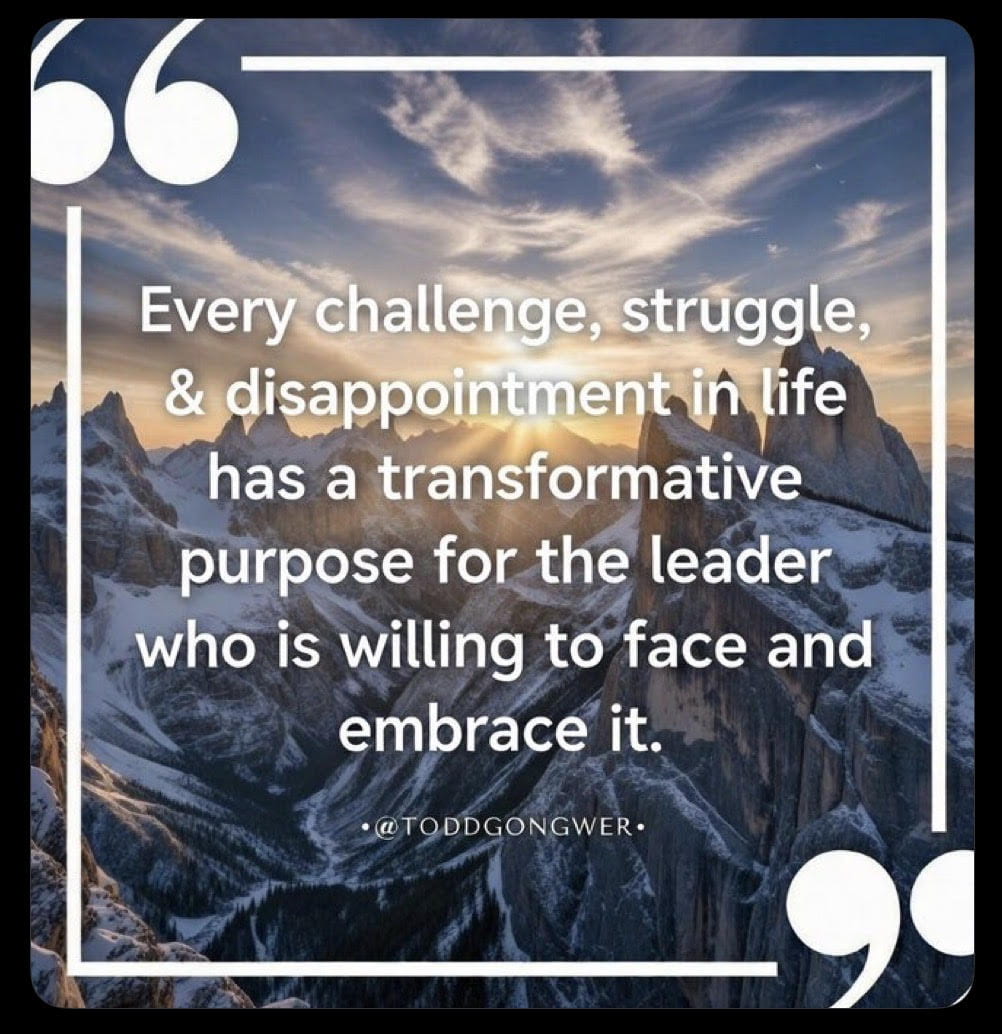
Every challenge, struggle, and disappointment in life has a transformative purpose for the Leader who is willing to face and embrace it.
~Todd Gongwer

Every challenge for Leaders quote by Todd Gonger


More Weekend Ed. Quotes

#GCUTEC544 #GCUTEC595 #GCUTEC516
#CUNE604, #CUNE605 #CUNE603

By

Defining Terms – Educational Context

     Sometimes Graduate Research Students ask for a definitation and application of Educational context. Educational context refers to the comprehensive environment—physical, social, and cultural—where learning occurs, encompassing classroom settings, pedagogical methods, and external factors like community, technology, and policy that influence educational outcomes. It shapes how curriculum is delivered and understood, requiring adaptation to diverse student backgrounds to maximize learning.
educational context rendered in collaboratoin between Helen Teague and DeepAI.org
Key Components of Educational Context:
    • Environmental/Physical: School, location, and classroom design.
    • Learner Characteristics: Age, gender, culture, and developmental stage.
    • Instructional/Pedagogical: Teaching methods, available resources, and curriculum.
  • Societal/External: Socioeconomic factors, policy changes, and parental influence.
Educational Context Example (Impact on Learning):
An urban, under-resourced public school with a diverse student population (Context A) requires different teaching strategies (e.g., culturally responsive pedagogy, community-based projects) compared to an affluent, technology-rich suburban school (Context B). Understanding this context allows educators to tailor their approach, ensuring that teaching methods are effective for that specific environment.
Importance:
  • Success and Implementation: Understanding context helps in implementing effective, tailored pedagogical strategies rather than one-size-fits-all approaches.
  • Influence on Teaching: Context can facilitate, hinder, or act as a total barrier to instructional efforts.
  • Developmental Factors: According to Bronfenbrenner’s model, a student’s context ranges from immediate surroundings (family) to broader, nested societal structures, all influencing their growth.
An awareness of educational context helps to avoid stereotyping while ensuring that teaching is relevant and effective.

By

Repost of a Favorite Video based on a Kafka story

     One of the predicted downfalls of digital media was that the original pioneering spirit of creativity and sharing would succomb to monetization. After the original hosting service discontinued my videos on its library, I was frantic to recover what the company who hosted my paid subscription did not value and deleted (along with a small, but vital video catalog. I was beyond relieved to find that Edublogs retained the original video. This is the backup of the original video posted on March 6, 2020.

I am so grateful to Edublogs for maintaining the special creative relationship with its bloggers.

      Digital paranoia has caused me to re-record, save, and re-upload the original mp4 file. Here is the re-recorded, re-save, and reposted file. 
 

This video is based on the Kafka story, which is reposted at this link https://epicureanglobalexchange.com/kafka-lost-doll-little-girl/

It is also uploaded to my Vimeo account: https://vimeo.com/701846169


~~~

Special thanks to Jennifer Brown, Jazzi Spencer, Linda McCrary-Chavez, and Richard Nesbit.
Original post and video at this link: https://4oops.edublogs.org/2020/03/09/teaguestory1/

                                                               References

Chef Charlie (2020). Kafka, the Lost Doll and the Little Girl. https://epicureanglobalexchange.com/kafka-lost-doll-little-girl/

Skip to toolbar